
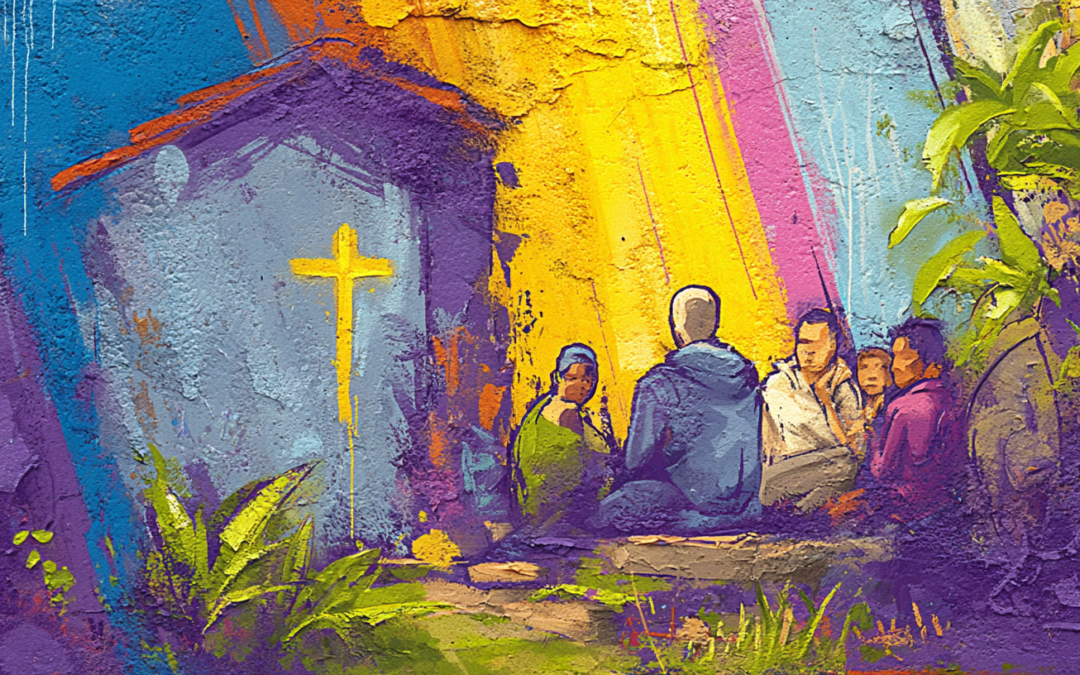
On 1 March, in the Diocese of Jundiaí, Bishop Arnaldo Carvalheiro Neto welcomed Catholic LGBT+ groups from the state of São Paulo into the episcopal residence. And while some headlines rushed toward scandal. We prefer to begin with the facts. The day began with Mass in the chapel of the house. It continued with testimonies, dialogue, and the sharing of questions that many groups carry in parish and diocesan life. The diocesan report speaks of listening, sharing, and communion. It also places the meeting within Lent, under the 2026 Fraternity Campaign theme “Fraternity and Housing” and the verse “He came to dwell among us” (John 1:14).
This matters because the Church is not only seen in documents, statements, and debates. The Church is also seen in doors that open, tables where people sit together, and homes where prayer and listening happen without fear. A bishop receiving people in his own house is not a detail. It is a pastoral sign. It says that accompaniment is not carried out from a distance.
The meeting was described as an abstract conversation. It had faces, names, and communities. The sources explicitly mention support from the Comunidade Diversidade e Fé of the Diocese of Jundiaí, a community accompanied by Bishop Arnaldo since 2022 and described as a space of prayer, study, and welcome for LGBT+ Catholics, parents, and family members. The diocesan account also names representatives of the National Network of Catholic LGBT+ Groups, groups from the archdioceses and dioceses of Jundiaí, Bauru, Baixada Santista, Guarulhos, and São José do Rio Preto, and three groups from the city of São Paulo: GAPD/SP, Diversidade Católica Ipiranga, and MOPA. Representatives of Pastoral Carcerária and Justiça Restaurativa were present as well.
That list matters. It shows that this was not a private gesture for a photo. It was a meeting of communities, networks, and pastoral paths. It brought together local groups, a national network, and ministries that work close to people in situations of exclusion and vulnerability. Pastoral Carcerária itself said that one of the points raised was the condition of LGBT+ people in prison, where abandonment and hardship often become sharper.
Bishop Arnaldo’s own language is also worth noting. According to the diocesan report, he spoke of these Catholic LGBT+ groups as a theological space, grounded in spirituality, charity expressed through welcome and mutual help, and study and formation. One may agree or disagree with that language. One cannot deny what it reveals: this was not framed as a problem to be contained, but as an ecclesial reality to be accompanied.
For GNRC, this is the point. We do not need to turn every such event into a battlefield of labels. It is enough to say clearly what happened. A bishop welcomed Catholic LGBT+ groups into his house. He prayed with them. He listened to them. He received communities that continue to seek life in the Church through faith, prayer, study, mutual support, and service. This does not erase questions. It does give those questions a place where they can be carried as Christians carry them: in communion, in truth, and under the sign of the Gospel.
The Church often speaks of being a home. In Jundiaí, for one day, that word took visible form.