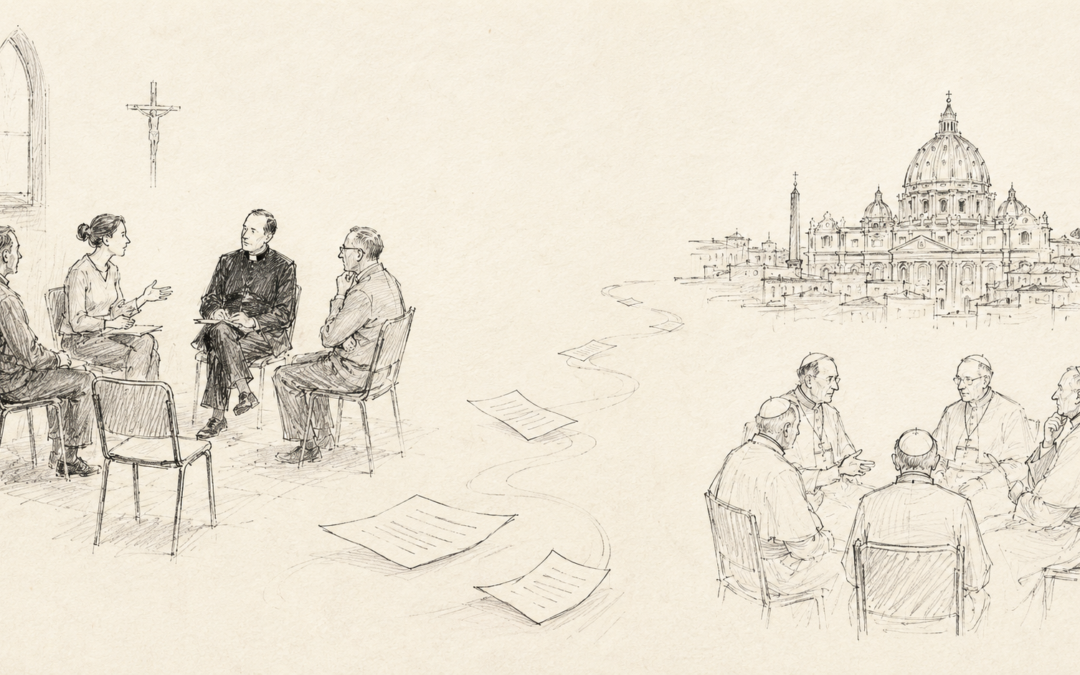
On 26 and 27 June, Pope Leo XIV gathered the College of Cardinals in Rome for an Extraordinary Consistory. According to Vatican News, 178 cardinals were present for the opening session.
The programme brought together questions about the Church, the world, peace, the common good, and the implementation of the Synod. In his opening address, Pope Leo asked the cardinals for “freedom, frankness, and loyalty,” and described sincere counsel as an act of communion.
Every gathering in Rome raises many questions. A bishop or cardinal does not arrive in Rome alone. He brings reports, concerns, memories, conflicts, wounds, hopes, and the voices he has heard. The life of a local Church is never fully contained in a document, a briefing, or a meeting agenda.
For LGBT+ Catholics and their families, this matters. Many experiences begin far from Rome: in a parish office, at a kitchen table, in a school, in a conversation with a priest, in a family that is trying to remain faithful while facing fear, silence, or rejection. Some stories are shared. Others remain hidden because people are not sure they will be received.
During the days of the Consistory, the Board of the Global Network of Rainbow Catholics wrote privately to bishops with whom Board members already have pastoral contacts, often good relations with bishops, in different countries and regions. The letter was not a public campaign. It offered GNRC’s availability, where useful, to share pastoral experience gathered through its member groups and to connect bishops with people working in local contexts.
This is a humble gesture. It does not claim to solve the distance between local communities and Rome. It does not replace the responsibility of bishops, pastors, theologians, families, or parish communities. But it says that some experience already exists, and that we are willing to help, serve, dialogue..
Across its network, within our network, we encounter Catholics who continue to pray, serve, accompany others, and seek a place in the life of the Church. Some are LGBT+ people. Some are parents. Some are pastoral workers, theologians, religious, priests, or lay leaders. Their situations differ from country to country. In some places the concern is pastoral recognition. In others it is family rejection, civil discrimination, violence, or fear.
These realities can and should be named with care, shared through existing relationships, and offered to those willing to listen.
The Consistory has ended. Its documents, addresses, and reports now belong to the wider memory of the Church. For us, one concern remains: when bishops and cardinals speak about the life of the Church, the lives of LGBT+ Catholics and their families should not remain absent.
Pope Leo wishes to make these encounters into annual meetings in Rome. Our hope is that more local stories, including those of LGBT+ Catholics and their families, will be part of future conversations in Rome.